
Mental Blocks While Skiing – How to Get Back into Flow on the Slopes

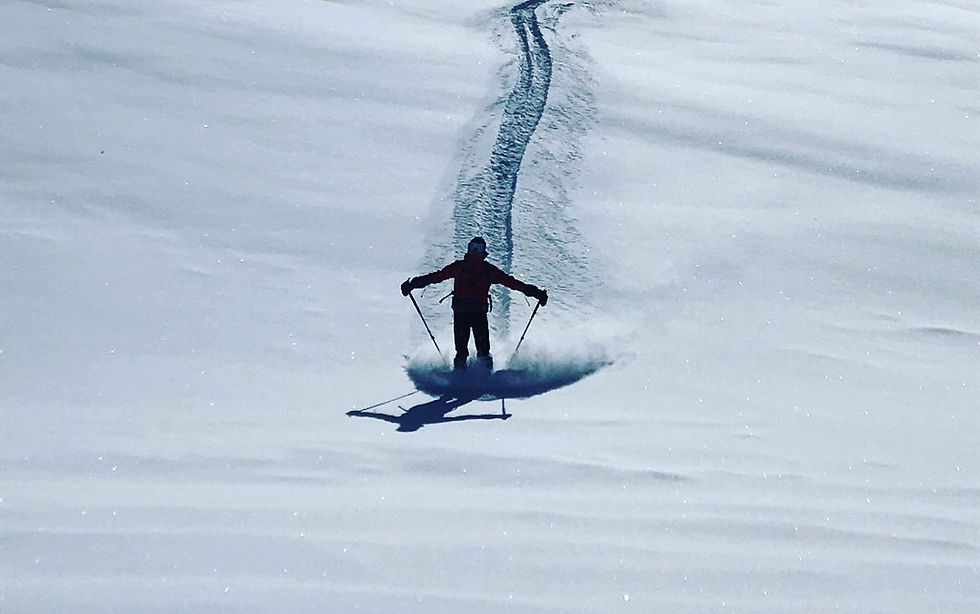
Have you ever experienced that feeling on the slopes when you just cannot seem to get into your rhythm?
You know exactly what a good turn should look like. You have done it many times before. Yet suddenly something feels off. Your movements become tense, your decisions slower, and your mind seems to interfere with every turn.
Many skiers describe this moment like this:
“I know how to ski – but somehow my head is blocking me.”
Mental blocks while skiing are surprisingly common. They can affect beginners as well as experienced skiers. When they appear, they can take away confidence, slow down progress and reduce the enjoyment of being on the mountain.
The encouraging part is that mental blocks rarely mean that someone has suddenly lost their skiing ability. In most cases they are simply a sign that the brain’s stress and safety system has been activated.
With the right strategies it is often possible to release these blocks and return to a state where skiing feels natural and enjoyable again.
What Is Flow in Skiing?
The concept of flow describes a mental state in which a person becomes fully absorbed in an activity. The psychologist Mihály Csíkszentmihályi introduced this concept to explain moments of optimal performance and deep engagement.
movements feel smooth and automatic
attention is fully focused on the present moment
decisions happen intuitively
thinking becomes quieter
Many skiers have experienced this state at some point: turns connect effortlessly, the terrain becomes clear and skiing feels almost effortless.
Flow is not only enjoyable – it also improves performance and safety. Research in sport psychology shows that athletes perform best when their attention is focused and their movements remain relaxed (Csíkszentmihályi, 1990; Jackson & Csíkszentmihályi, 1999).
Mental blocks interrupt this state.
Why Mental Blocks Appear While Skiing
Mental blocks often occur when the brain interprets a situation as uncertain or risky. In response, the body activates its stress response system.
Typical triggers include:
a fall or near fall
steep or icy slopes
crowded pistes
pressure to perform
negative past experiences
When this happens, thoughts often become louder and more dominant. Instead of focusing on movement and rhythm, the mind begins to analyse, control or worry.
This often creates a cycle:
thoughts → tension → reduced control → more insecurity.
Understanding common mental blocks is the first step to breaking this cycle.
Mental Block 1: Negative Thoughts (“I Can’t Do This”)
One of the most common barriers in skiing is negative self-talk.
Examples include:
“I cannot do this.”
“I am going to fall.”
“Everyone else is skiing better than me.”
These thoughts usually appear when the body is already under stress. They increase insecurity and can lead to stiff, defensive movements.
In sport psychology this pattern is called negative self-talk, which can directly influence performance and coordination.
Solution
Thought interruption
When you notice negative thoughts appearing, interrupt them consciously. A simple mental “Stop” can help break the cycle.
Then replace the thought with a more constructive focus, for example:
“I am skiing calmly and in control.”
“I focus on my rhythm.”
Redirect your attention
The mind cannot focus on many things at once. By directing attention toward something concrete, disruptive thoughts lose their influence.
Examples include:
the position of your hands
the rhythm of your turns
your breathing.
Mental Block 2: Fear of Failure
Another common obstacle is the fear of making mistakes.
This often occurs when:
other skiers are watching
friends are skiing faster
expectations become too high.
Fear tends to increase muscle tension. This can reduce fluidity of movement, which in turn reinforces the feeling of insecurity.
Solution
Set realistic goals
Instead of focusing on the entire descent, choose small and manageable goals.
Examples include:
one calm turn after another
maintaining a comfortable rhythm
choosing a clear line on the slope.
Small successes help rebuild confidence.
Accept mistakes
Mistakes are part of the learning process in skiing, just as they are in any other sport.
Many experienced skiers report that small mistakes actually helped them develop better awareness and control.
Mental Block 3: Overload and External Pressure
Sometimes mental blocks are not caused by fear but by overstimulation or pressure.
This may happen when:
slopes are crowded
other skiers move very fast
personal expectations become too demanding.
In these situations the nervous system can become overloaded, making concentration more difficult.
Solution
Slow down
Reducing speed is one of the most effective ways to regain control.
Lower speed allows:
more time for decisions
clearer perception
less stress.
Take short breaks
A short pause at the side of the slope can already make a difference.
A few deep breaths help the nervous system calm down and restore clarity.
How to Return to Flow on the Slopes
Beyond addressing specific blocks, several strategies help skiers reconnect with the flow state.
Prepare before starting a run to avoid mental blocks at skiing
A brief moment of awareness before starting a descent can be surprisingly powerful.
Stand at the edge of the slope and take a few seconds to:
breathe calmly
collect your attention
visualize a smooth and controlled descent.
Visualization techniques are widely used in professional sports.
Create small rituals
Rituals help the brain transition into activity mode.
Examples include:
a short stretching movement
a breathing exercise
focusing on one key movement before starting.
Such rituals create familiarity and reduce stress.
Remember why you enjoy skiing
One important aspect is often overlooked.
Skiing is meant to be enjoyable.
When the focus shifts too strongly toward performance, comparison or speed, the flow state becomes harder to access.
Reminding yourself why you love skiing – the movement, the mountains, the sense of freedom – often helps restore a more relaxed mindset.
Conclusion: Mental Blocks in Skiing Are Normal
Mental blocks can appear in any skier, regardless of experience.
They usually arise from a combination of:
stress
uncertainty
high expectations.
With patience, awareness and the right mental strategies, these blocks can often dissolve surprisingly quickly.
When the mind becomes quieter again, many skiers rediscover the feeling they were looking for:
smooth movement, clear decisions and the simple joy of skiing.
Would you like to work on your mental blocks while skiing?
If you notice that thoughts, tension or insecurity regularly interfere with your skiing, targeted mental coaching can help.
As a psychologist and passionate skier working in the Arlberg region, I support skiers who want to regain confidence and enjoyment on the slopes.
Feel free to contact me – together we can help you return to a relaxed and confident skiing experience.


Comments